 Academia
 Participant-private
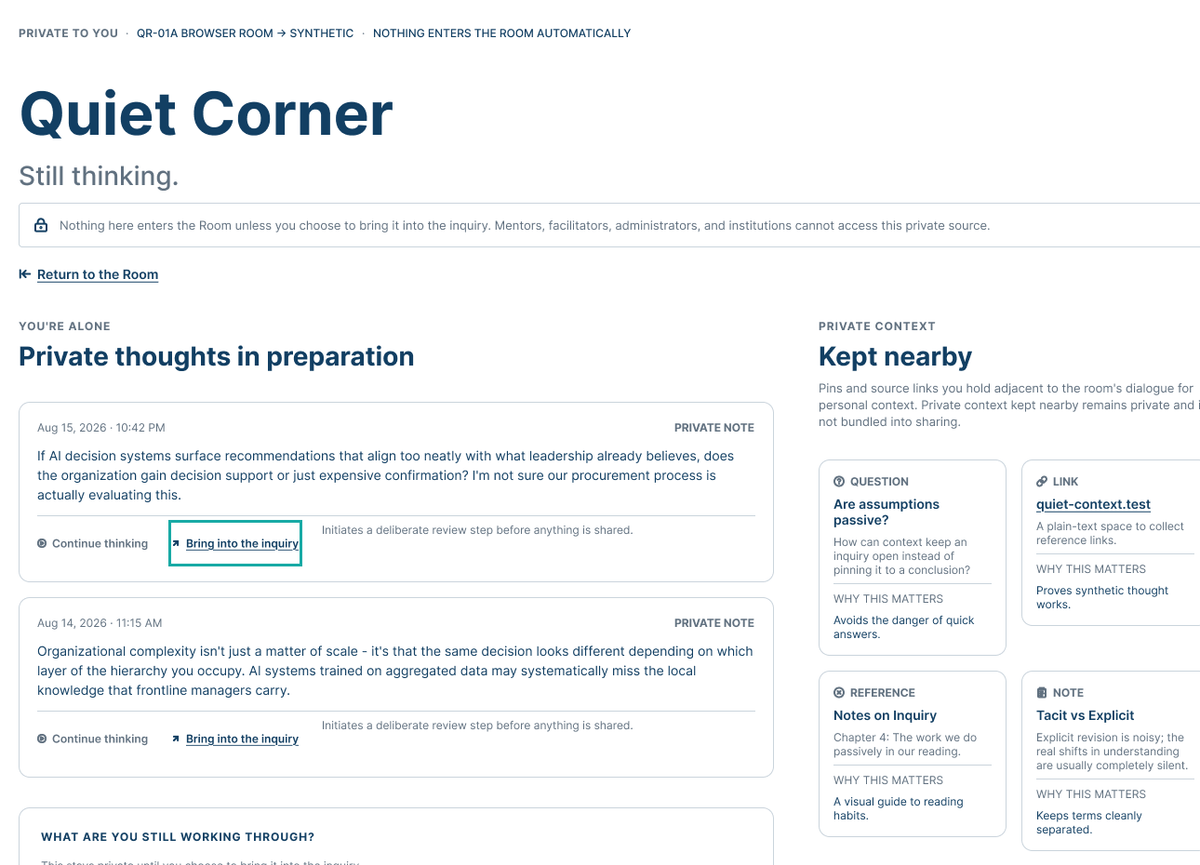
Unfinished thought remains in the learner’s private space.
How Cognit Academia Works
Cognit Academia gives each part of that journey an appropriate place while preserving the connections between them.
Cognit Academia connects learning and continuity through distinct spaces for learning, private thought, shared inquiry, records, and continuation.
Five-Stage Model
Develop knowledge through structured professional and academic learning.
Explore uncertainty, test assumptions, and preserve unfinished thought before deciding what should be shared.
Participate in focused inquiry with peers and facilitators while keeping authorship and context intact.
Build a lasting record of evidence, milestones, authored work, collaboration, and verified capability.
Carry selected knowledge, credentials, and professional identity beyond the course or institution.
Private Thinking
Quiet Corner is designed for participant-private notes, questions, sources, drafts, and unfinished reasoning. Verify My Thinking offers advisory assistance for examining evidence, uncertainty, and alternatives. The learner reviews the response and decides what, if anything, to rely on or share; private thought does not become shared or institutional content automatically.
Deliberate Sharing
Select a private note or idea.
Review and edit the exact shared copy.
Confirm the destination and visibility.
Create a separate Inquiry Room contribution.
Preserve the private source independently.
Collaborative Inquiry
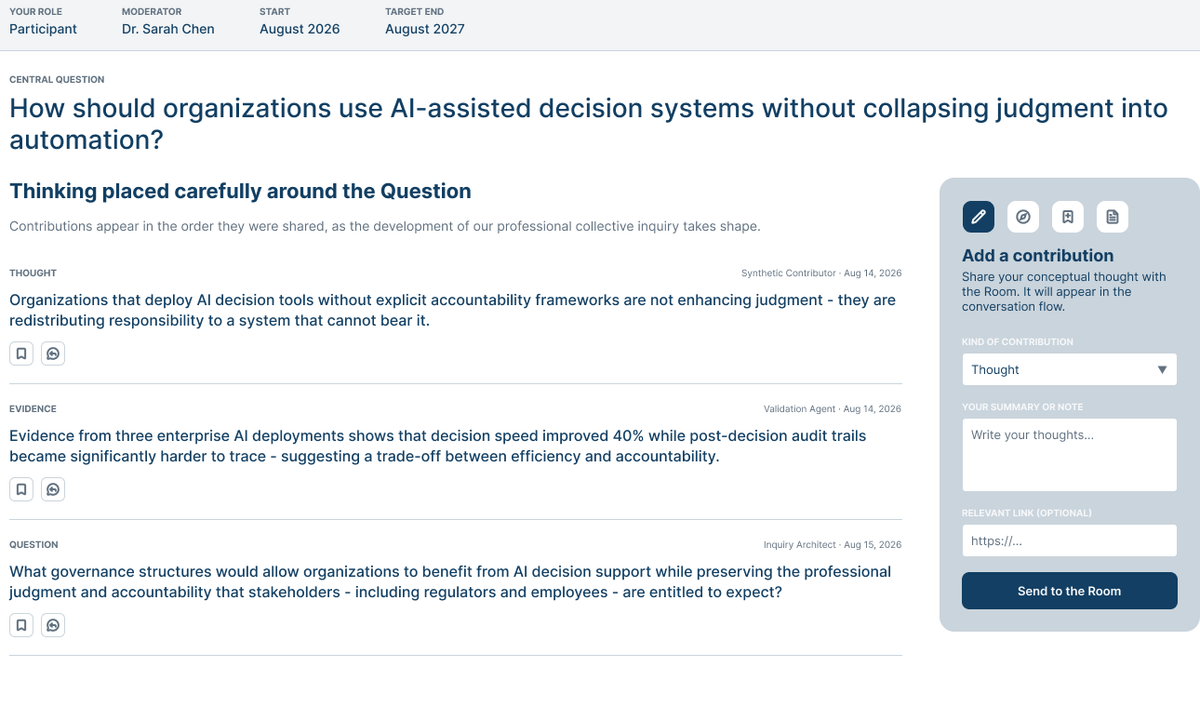
Inquiry Rooms organize a bounded question, attributable contributions, facilitator stewardship, and shared artifact development. Participants and facilitators interpret the inquiry, review shared work, and decide when it is ready to move forward.
“How should organizations use AI-assisted decision systems without collapsing judgment into automation?”
Inquiry Room: AI, Judgment, and Organizational Accountability
Records and Continuation
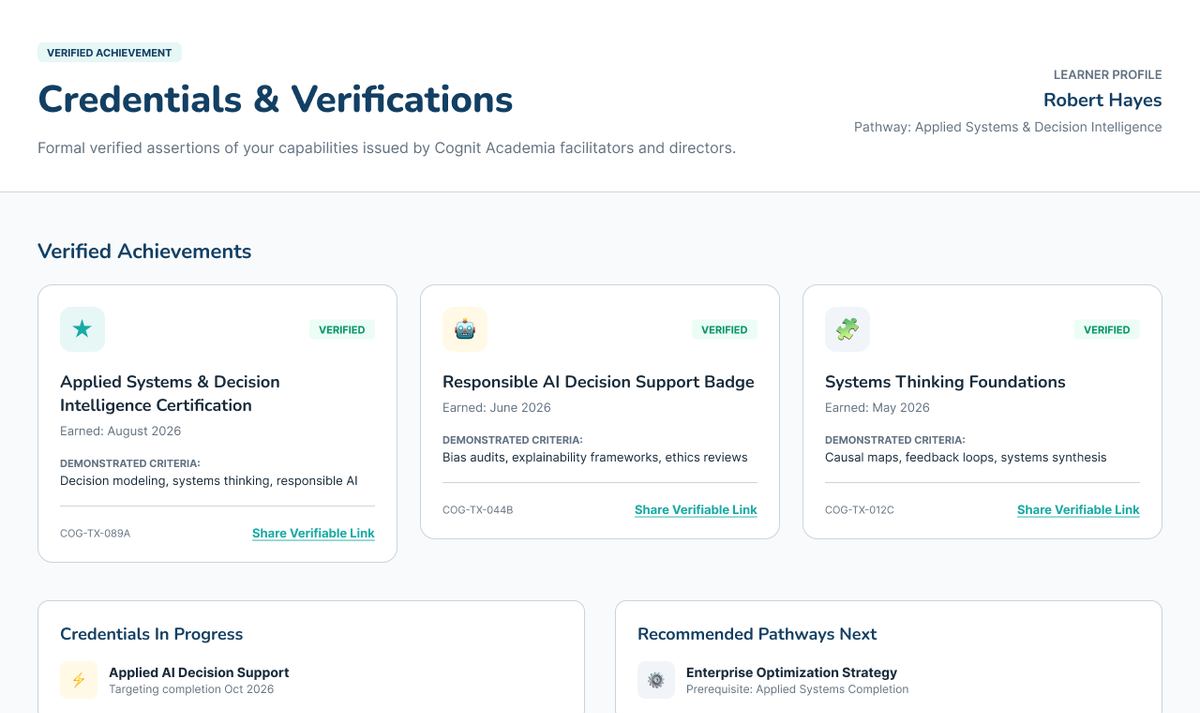
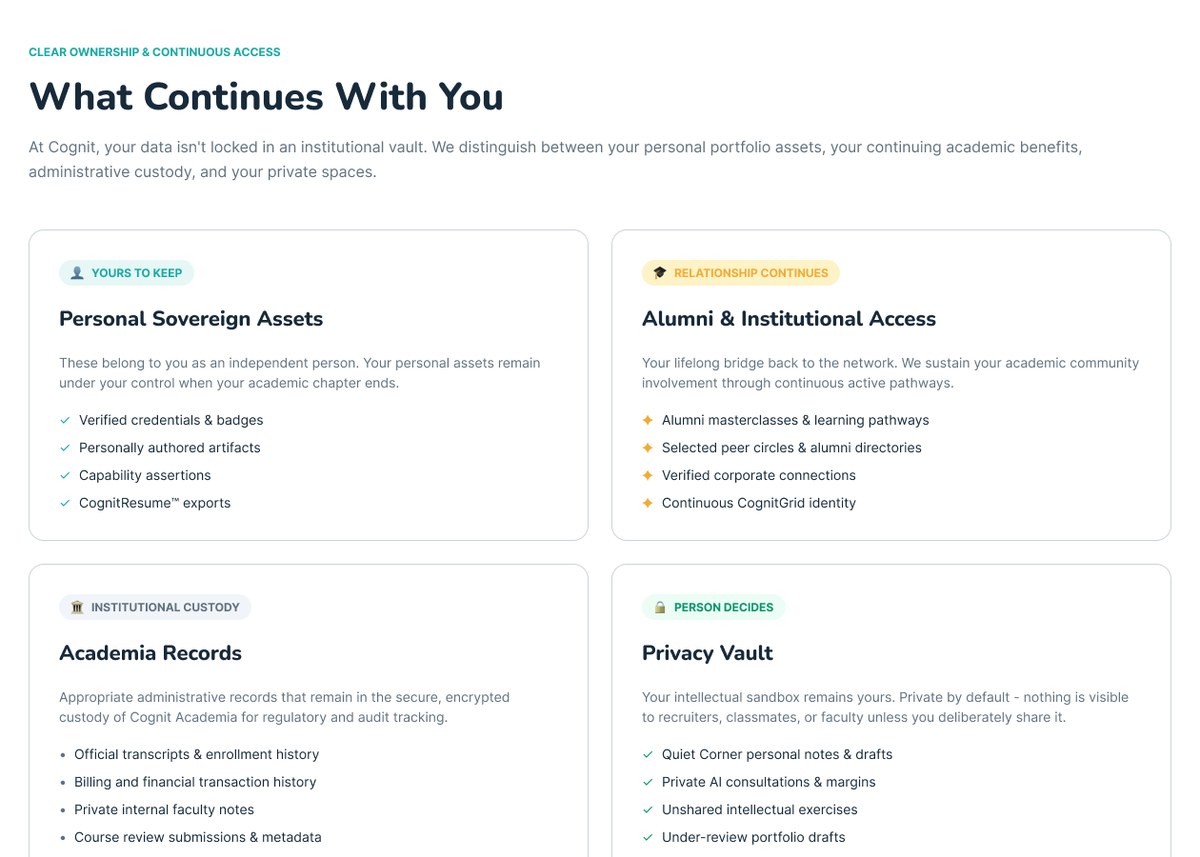
Learners review what they built, understand what continues with them, shape a public-facing identity, and move from an active learning chapter into continuing participation.
Trustworthy Boundaries
Unfinished thought remains in the learner’s private space.
Confirmed contributions enter a bounded collaborative context.
Administrative custody remains distinct from intellectual ownership.
Identity appears publicly only through selected projection.
Explore how Cognit Academia could support professional learning, inquiry, capability development, and continuity in your organization.