 Academia
 Think privately
Keep notes, uncertainty, and unfinished reasoning protected while ideas are still developing.
For Adult Learners & Professional Cohorts
Robert Hayes is an experienced professional completing Applied Systems & Decision Intelligence. His journey shows how learning, private thought, deliberate contribution, evidence, credentials, and identity can remain connected without becoming automatically public.
Cognit Academia helps experienced adult learners carry their thinking, evidence, credentials, and chosen identity beyond a course or cohort.
Experienced learners need room to test ideas, participate in serious inquiry, preserve the evidence of growth, and decide what becomes part of a continuing professional identity.
Keep notes, uncertainty, and unfinished reasoning protected while ideas are still developing.
Review what will be shared, where it will go, and how it will be visible before contributing.
Carry verified evidence and selected identity forward without automatic exposure or placement claims.
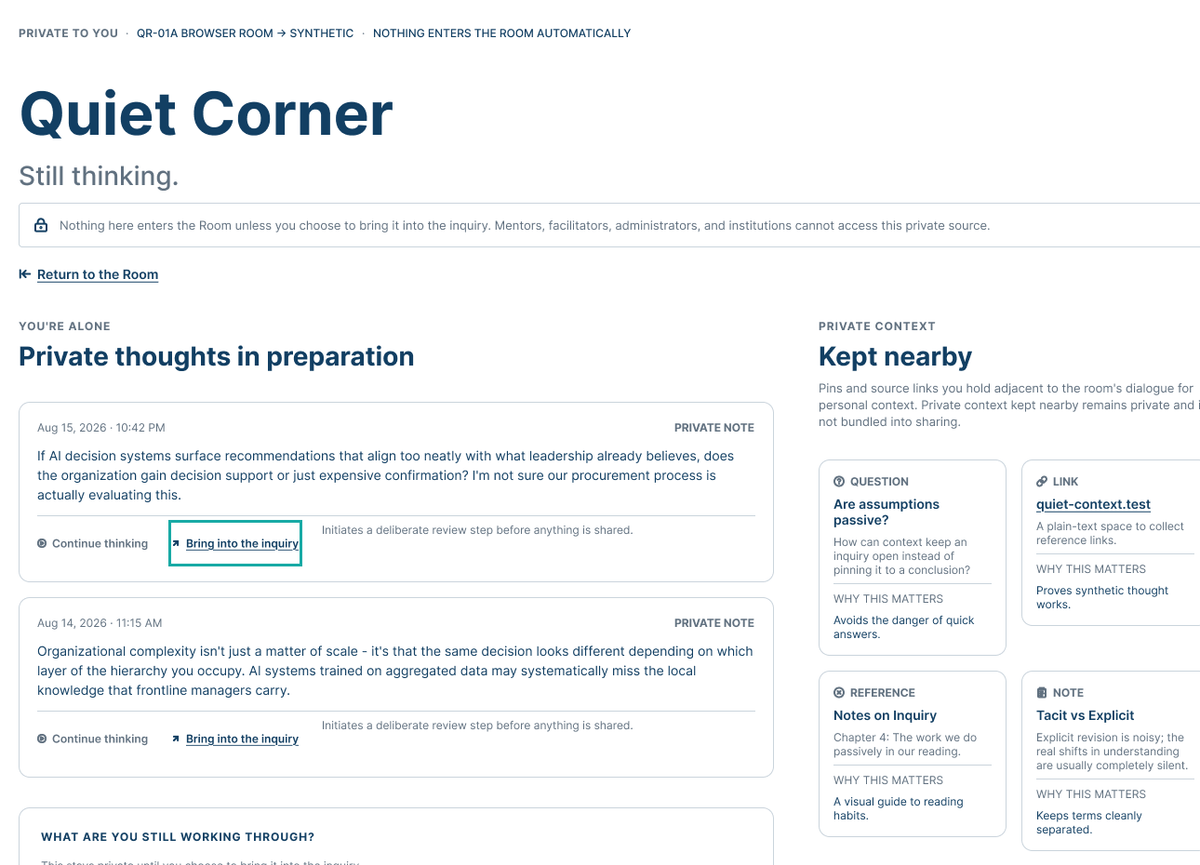
Private by Default
The Quiet Corner separates reflection from shared participation. Private notes do not enter an Inquiry Room unless the learner deliberately chooses to contribute.
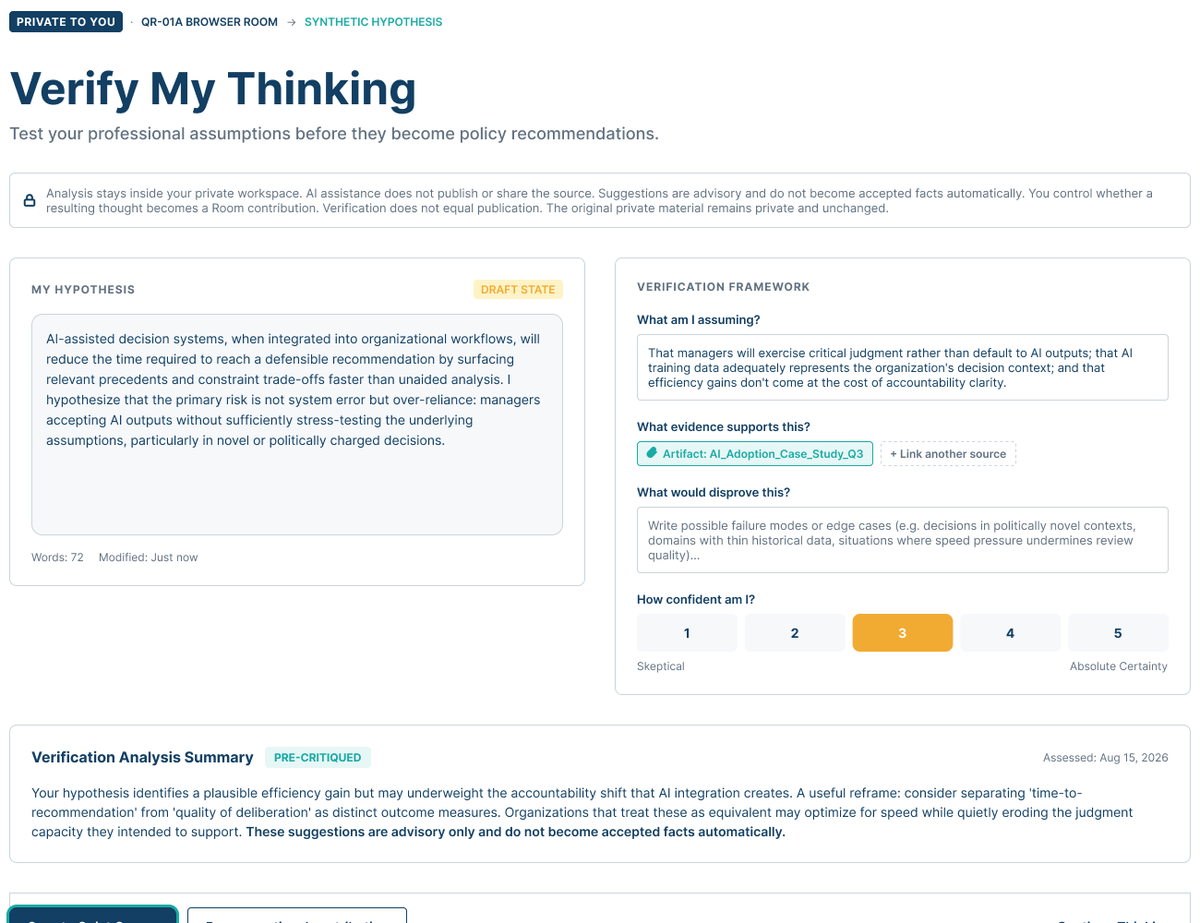
Contextual Assistance
Verify My Thinking helps Robert examine evidence, uncertainty, and alternatives. It is an advisory tool—not a truth engine and not a channel that publishes private work.
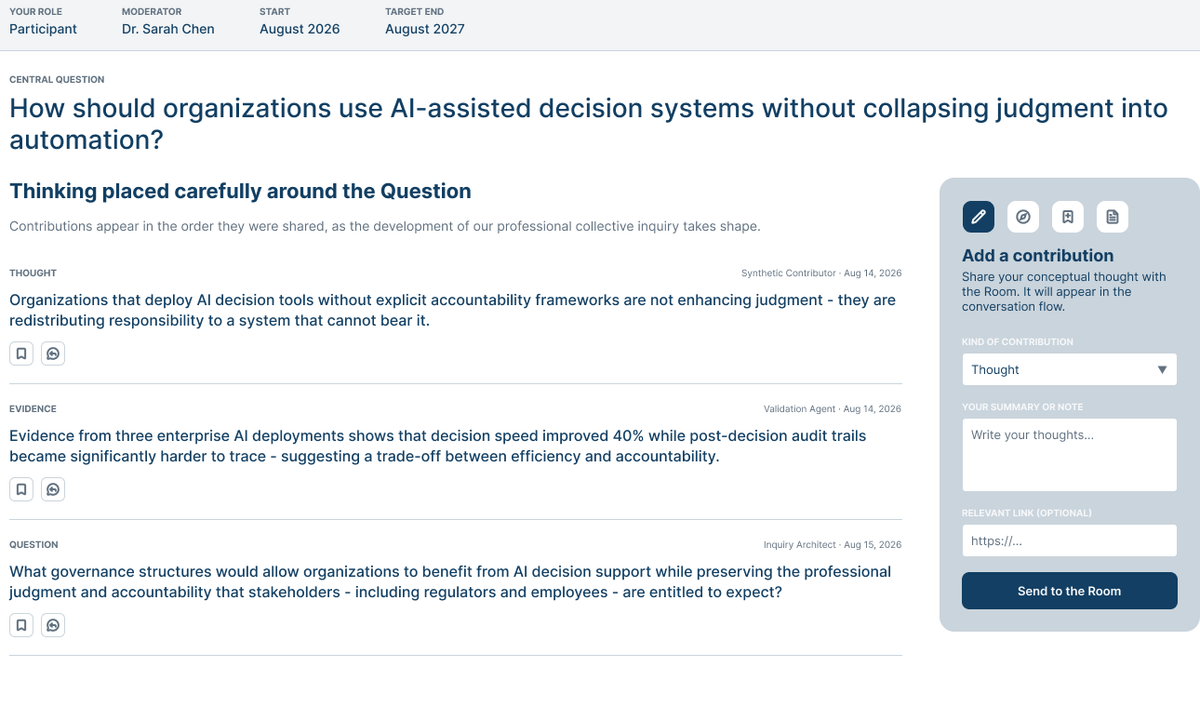
Think Together
Robert can contribute to the canonical inquiry, see how the group is progressing, and preserve authorship as individual thought becomes part of shared professional learning.
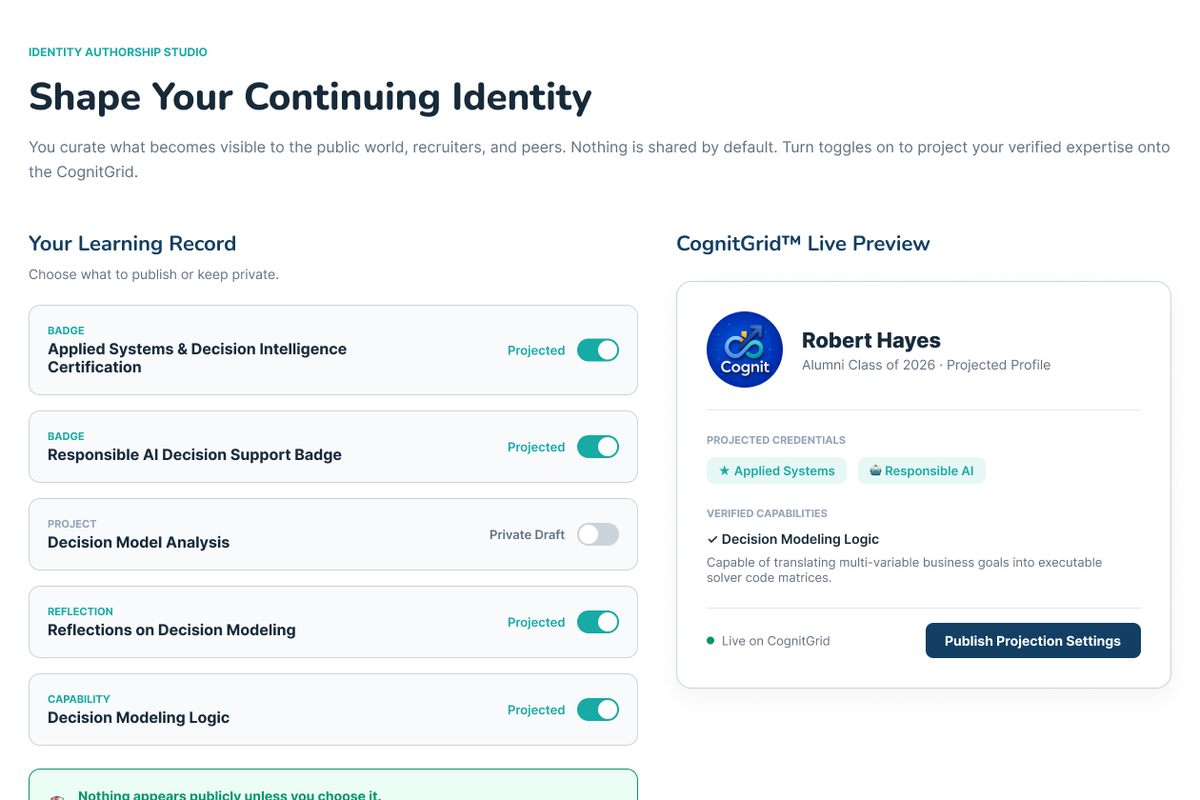
Selective Continuity
After the learning experience, Robert can select verified credentials and evidence for a continuing identity without implying automatic matching, hiring, or universal public exposure.
A Deliberate Operating Model
Follow the pathway and understand the next meaningful step.
Test ideas with protected notes and contextual assistance.
Contribute selected reasoning to a facilitated professional inquiry.
Preserve evidence, review credentials, and choose what carries into continuing identity.
Boundaries Matter
The learner remains responsible for deliberate transitions between private thought, group contribution, verified records, and public identity.
Connect learning to decisions, evidence, and work that matter beyond the course.
Keep a coherent record of questions, contributions, artifacts, and demonstrated capability.
Understand the boundary at each step and choose what moves forward.
Start with the people, learning responsibility, evidence needs, and continuity that matter in your context.