 Academia
 Verified development
Connect credentials and capability claims to evidence and review rather than unsupported profile language.
For Enterprise Learning
Cognit Academia connects sponsored professional learning, facilitated inquiry, applied evidence, and organizational continuity while preserving a clear boundary around the learner’s private intellectual record.
Cognit Academia helps enterprises develop verifiable capability and organizational knowledge while keeping the learner’s private intellectual record distinct.
Enterprises need a responsible view of professional development: what people completed, what they demonstrated, and what a cohort learned together—without turning reflection into surveillance.
Connect credentials and capability claims to evidence and review rather than unsupported profile language.
Give cohorts a structured place to examine consequential questions and produce durable shared practice.
Keep private notes and unfinished reasoning outside employer visibility unless a learner deliberately contributes.
Facilitated Inquiry
Facilitators can guide a shared inquiry, preserve context, and help a cohort move toward accountable practice without entering the private workspace where early thinking develops.
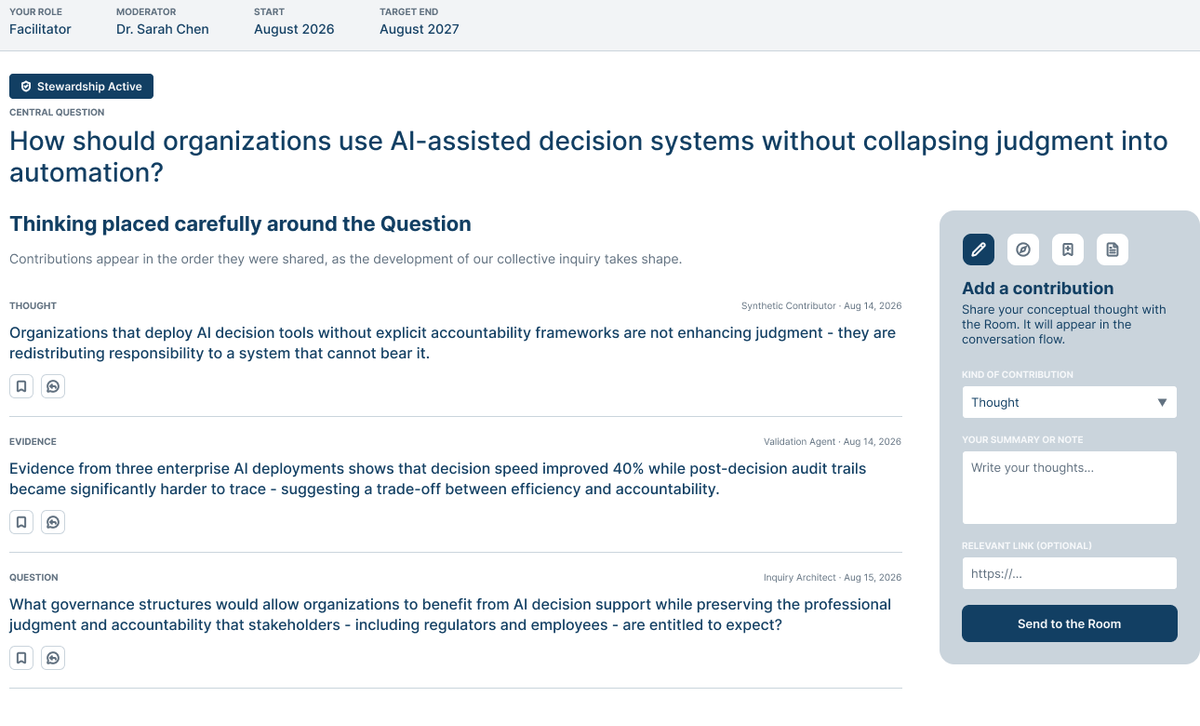
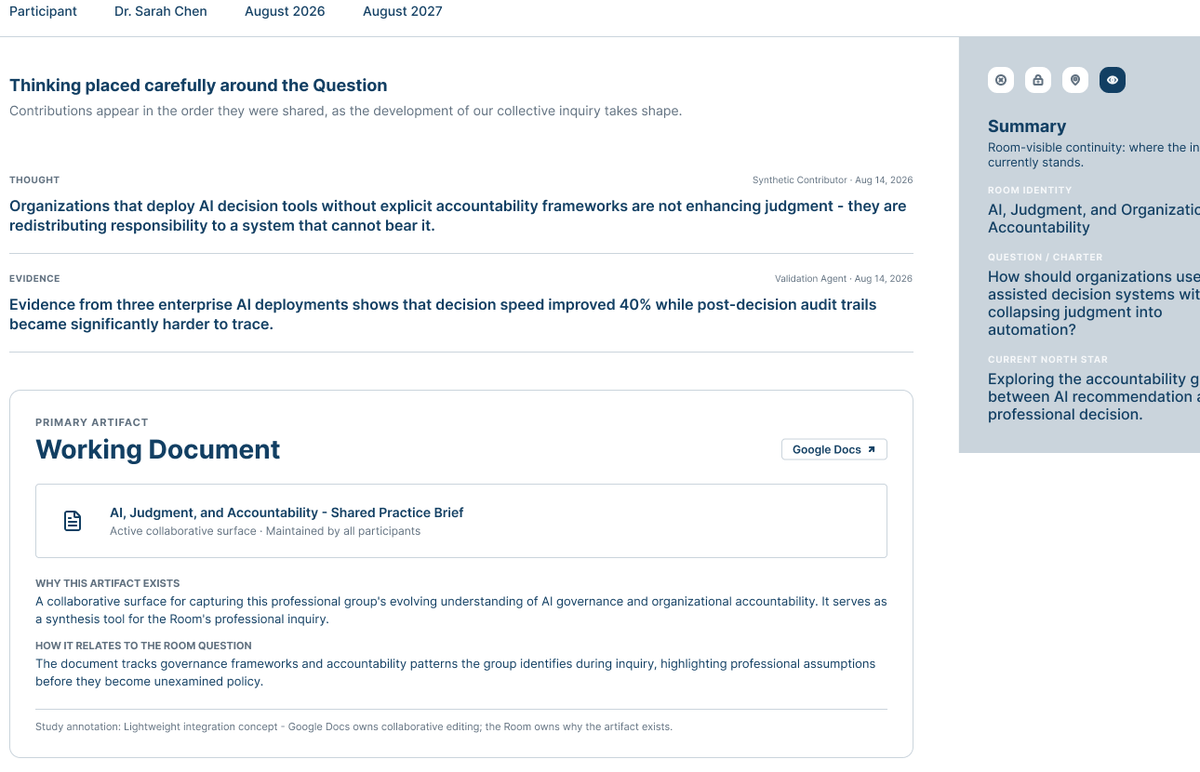
Organizational Knowledge
A shared working document gives the cohort somewhere to synthesize learning, disagreement, evidence, and operational judgment without implying automatic publication.
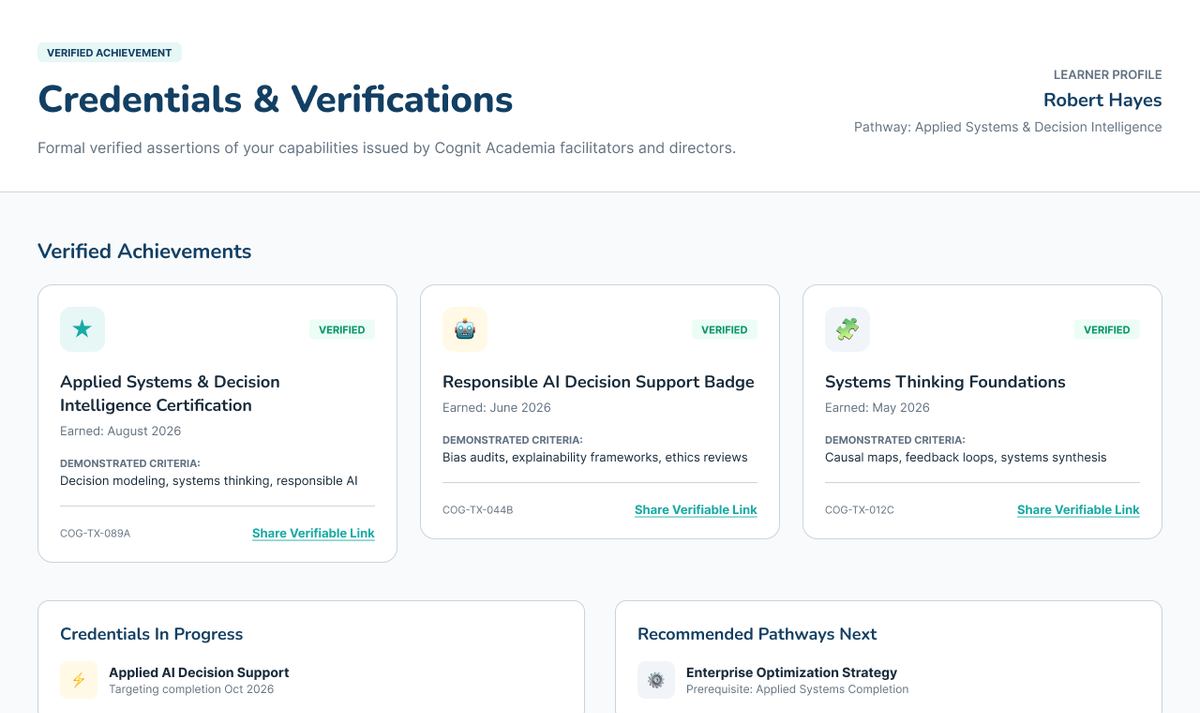
Evidence of Development
Evidence-linked credentials can show verified development while remaining distinct from predictive workforce analytics, employee monitoring, or automatic skills inference.
A Deliberate Operating Model
Define the professional context, cohort, and accountability question without claiming an HRIS or LMS replacement.
Connect structured learning to deliberate participant contributions and facilitator stewardship.
Retain verified development and shared practice while respecting individual ownership boundaries.
Use the durable record to inform the next program rather than starting with no institutional memory.
Boundaries Matter
The intended model distinguishes sponsored participation, verified development, shared organizational artifacts, and a learner’s protected intellectual record.
See how participation develops toward applied capability, not only whether a course was completed.
Guide inquiry with enough context to support quality and accountability.
Keep private exploration private and carry verified evidence into a continuing identity by choice.
Start with the people, learning responsibility, evidence needs, and continuity that matter in your context.